

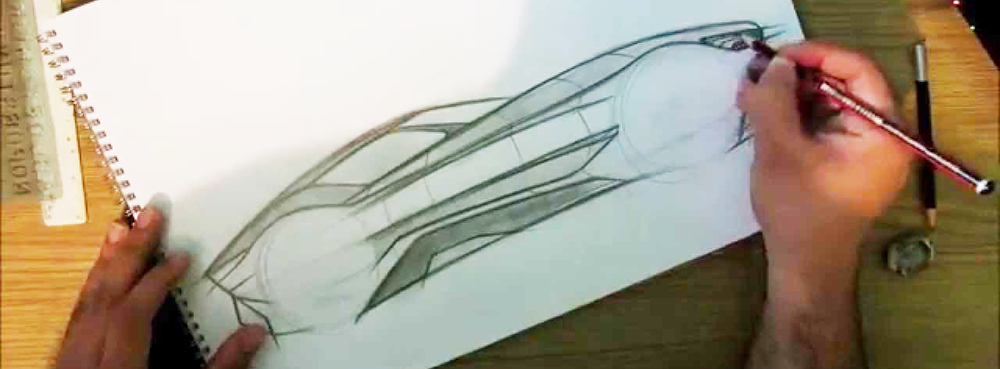
How to Support Your Child’s Car Design Journey
Updated, June 2026
When a child shows a deep interest in drawing cars, it often begins as a hobby, sketching supercars in the margins of notebooks, watching design videos online, filling pages with side profiles and dramatic concepts. For some students, however, that interest becomes something more serious. They don’t just want to know how to draw cars, they obsess over proportion, stance, wheels, and form. They embark on a car design journey.
They want to understand why a design works.
If your child is showing that level of curiosity and commitment, you may be wondering:
Is this realistic?
Is there a real career path?
How do we support this properly?
The truth is that automotive and transportation design is one of the most competitive creative fields in the world. And the difference between a talented hobbyist and a student accepted into a top design program often comes down to mentorship.
Michael’s Pro Insight: Turning Your Child’s Passion into a Professional Career
“I know how daunting this path can feel to parents. I was that kid once, and my parents shared those exact same fears. Having designed the Jeep Wrangler and other award-winning vehicles for Chrysler, I can tell you that this is a highly specialized world. The goal isn’t just ‘getting into a school’—it is about ensuring your child has the professional-grade portfolio required to win the merit scholarships that make a top-tier education possible. Helping students achieve this is exactly what my program has been doing for over ten years.”
First: Understand the Competitive Reality
Transportation design programs at top schools are small, selective, and internationally competitive. Students are applying from across the world, many with years of focused preparation, strong mentorship, and highly developed portfolios. Admission is not based on grades alone. It is not based on enthusiasm. It is based on portfolio strength.
That portfolio must demonstrate:
• Strong drawing fundamentals
• Confident perspective and proportion
• Original concept thinking
• Form development and ideation
• Understanding of automotive design language
• Professional-level presentation
This is not something most students can build alone through generic art classes, YouTube videos or casual sketching. Natural talent helps. Passion helps. But structure, critique, and industry-level guidance are what separate serious applicants from the rest. Understanding this key difference is the second step of the car design journey.
The Role of Mentorship in Car Design
Car design is not just “drawing cars better.” It is learning to think like a designer. A qualified mentor teaches students how to:
• Develop original ideas rather than copy existing vehicles
• Understand packaging and proportion rules
• Create believable design themes
• Communicate ideas clearly and efficiently
• Build cohesive portfolio projects
• Respond to critique constructively
These are industry-specific skills. They are rarely taught in general art classes. One-on-one tutoring accelerates this development because feedback is direct and personalized. Instead of guessing what admissions reviewers want, students receive precise guidance aligned with real design school expectations. This prevents years of trial and error.
Why One-on-One Tutoring Matters
In a classroom, students receive general instruction. In one-on-one mentorship, they receive targeted development. A skilled tutor can:
• Identify weaknesses immediately
• Correct perspective issues early
• Push conceptual thinking further
• Refine presentation quality
• Guide project selection for portfolio balance
Every student has different strengths. Some struggle with line quality. Others struggle with creativity. Others need help organizing portfolio projects cohesively. Personalized mentorship addresses the individual, not just the assignment. For students aiming at top-tier programs, this level of refinement is essential and is another key aspect of the car design journey.
Testimonial –
“Niko has been working with Micheal for a short time and already the change has been incredible. After months of barely picking up a pencil, he’s now constantly at the drawing table since his first class. Micheal has inspired him and reignited his excitement for drawing. In just a few weeks, his skills have improved greatly. He encourages Niko to push beyond his comfort zone. I’m so grateful for the positive impact he’s had on Niko’s creative journey.”
– Sheila S. Los Angeles, CA
A Proven Way to Support Your Child’s Car Design Journey
If you looking to support your child’s automotive design aspirations, there is no better program for doing this than our Tailored Course Automotive Design Program. Parents are seeing a 10X+ return on their investment with their students not only getting admitted to the schools of their choice but receiving merit scholarships as well. Check out this quick video that follows one of our student’s car design journey to successful admission to a top automotive design program. For more info on the program that Abhi used to achieve his success, check our Automotive Design Course.

Building a Top-Level Portfolio
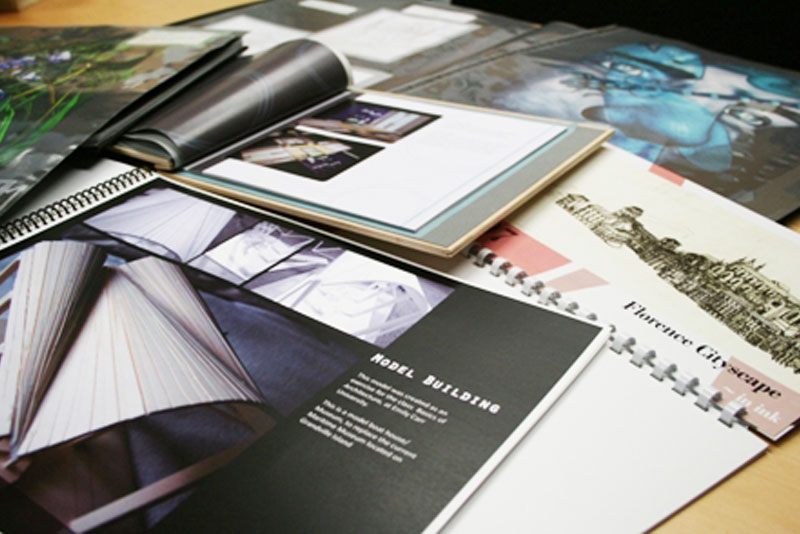
Parents often underestimate how strategic portfolio building must be. A competitive car design portfolio is not a random collection of sketches. It is a curated body of work demonstrating growth, design thinking, and professional readiness. Strong portfolios typically include:
• Exploratory sketch pages
• Development progress (from idea to refinement)
• Exterior design concepts
• Clear presentation boards
• A consistent visual narrative
A mentor helps students avoid common mistakes that can cost admission and scholarships, such as:
• Including too many repetitive sketches
• Copying existing cars
• Ignoring fundamentals in favor of flashy rendering
More importantly, a tutor with real industry and admissions experience understands what selection panels are looking for. That insight is invaluable.
Scholarships and Proven Outcomes
For many families, cost is a real concern. Top design programs can be expensive. Scholarships can make the difference between possibility and impossibility. Working with a mentor who has a proven track record of helping students not only gain acceptance to competitive programs but also secure partial or full scholarships adds measurable value.
Scholarship decisions are heavily influenced by portfolio strength. When a student presents work that demonstrates advanced development, thoughtful design thinking, and professional-level execution, they stand out, not just for admission, but for merit awards. This is where experienced mentorship pays for itself. A tutor who understands scholarship expectations can help students:
• Elevate project depth
• Clarify personal design voice
• Refine presentation clarity
• Remove weak pieces that dilute impact
These refinements can significantly influence financial outcomes.
I recently worked with a student who came to me in January with the desire to apply to Art Center College of Design in Pasadena, CA, one of the top car design schools in the world, in Oct of that year. Carl had never drawn cars in a serious way before but did have a Associate Degree in graphic design. We met once a week from mid-January until the end of Sept doing 2 complete projects and a series of ideation and sketch work programs.
In October, Carl applied to Art Center with the portfolio created from the projects we had done together. In November, he received his acceptance letter and in December he received a merit award of $108,000. The return on his investment was over 10X and had fundamentally changed the direction of his life in less than 12 months.
Emotional Support and Accountability
Beyond technical skills, mentorship provides something equally important: accountability and resilience. The car design path is demanding. Students will receive critique. They will face rejection. They will have moments of doubt. A mentor provides:
• Honest but constructive feedback
• Encouragement grounded in reality
• Structured progression
• Professional expectations
This balance builds confidence without false reassurance. Parents play a critical role here as well. Encourage practice. Support discipline. Avoid excessive praise that ignores weaknesses. Growth comes from challenge, not comfort.

Signs Your Child Is Ready for Mentorship
• Consider structured tutoring if your child:
• Draws consistently without being told
• Actively seeks improvement
• Accepts critique without quitting
• Talks about studying design seriously
• Is willing to commit time weekly to structured practice
Mentorship is most effective when the student is ready to work.
How Parents Can Support the Car Design Journey
• Invest in proper guidance early. Waiting until senior year to prepare a portfolio is risky.
• Encourage structured practice. Talent fades without discipline.
• Research programs realistically. Understand acceptance rates and expectations.
• Choose a tutor with proven results Look for documented student acceptances and scholarship success.
• Support resilience The path is competitive, perseverance matters.
Supporting a child’s car design journey is not about indulging a hobby. It is about recognizing serious potential and responding strategically. This field is competitive. It demands more than enthusiasm. It demands skill, refinement, and professional-level portfolio development. One-on-one mentorship shortens the path from talented beginner to competitive applicant.
It transforms scattered effort into focused growth. And when guided by someone with proven success helping students gain acceptance and earn scholarships, it becomes a powerful investment in your child’s future. The car design journey is not an easy path. But with structure, discipline, and the right mentorship, it is absolutely achievable.
Further Reading About Automotive Design Education
• What is the Best Major for Automotive Design?
About the Author – Michael Santoro
Michael Santoro is an award winning American automotive, transportation and product designer. He spent 6 years as an exterior designer for Chrysler where he created the the 1995 Car of the Year, Chrysler Cirrus and it’s sibling, the Dodge Stratus. Before leaving Chrysler, Mr. Santoro penned the exterior for the 1996 Jeep Wrangler returning the iconic vehicle to it’s roots. As part of his Jeep design, he created the first automotive “Easter Egg”. A practice now widely used throughout the industry to connect with owners and brand enthusiasts. In 1998 he created the Apple-specific case market with the launch of MacCase, a company he still runs today. He created the livery designs for a pair of Audi TCR RS3 race cars which went on to win the National Championship. Mr. Santoro has taught transportation design at Pratt Institute and guest lectured at College for Creative Studies (CCS) and Art Center College of Design. He recently expanded his tutoring efforts to 10 creative disciplines through Art College Prep.
Related Posts